Scientific Writing and Communication: Papers, Proposals, and Presentations

by Angelika Hofmann
Scientific Writing and Communication: Papers, Proposals, and Presentations covers all the areas of scientific communication that a scientist needs to know and to master to successfully promote his or her research and career. This unique "all-in-one" handbook begins with a discussion of the basics of scientific writing style and composition and then applies these principles to writing research papers, review articles, grant proposals, research statements, and resumes as well as to preparing academic presentations and posters.

FEATURES:

A practical presentation carefully introduces such basic writing mechanics as word choice and word location, sentence structure, and paragraph organization before moving into manuscript planning and organizational strategies. Extensive hands-on guidance for composing scientific documents and presentations then follows.

Relevant and multi-disciplinary examples taken from real research papers and grant proposals by writers ...

Read Me First! A Style Guide for the Computer Industry, Third Edition (3rd Edition)

by Sun Technical Publications
The definitive reference for technical writers, editors, and documentation managers, Read Me First! A Style Guide for the Computer Industry, Third Edition,has been revised and updated to cover everything from creating screencasts and referencing web sites to writing for wikis.

This award-winning guide to creating clear, consistent, and easy-to-understand documentation covers everything from grammar and writing style to typographic and legal guidelines. The authors, who are senior editors and writers at Sun Microsystems, share their extensive experience and provide practical tips and recommendations, including guidance on hiring writers, working with illustrators, managing schedules and workflow, and more.

The third edition of Read Me First features new chapters on:
  • Writing for wikis and encouraging wiki collaboration
  • Creating screencasts, using screencast terminology, and guidelines for writing narration
  • Creating alternative text ...

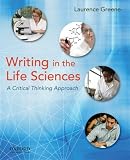
Writing in the Life Sciences: A Critical Thinking Approach

by Laurence Greene
Practicing scientists know that the quality of their livelihood is strongly connected to the quality of their writing, and critical thinking is the most necessary and valuable tool for effectively generating and communicating scientific information. Writing in the Life Sciences is an innovative, process-based text that gives beginning writers the tools to write about science skillfully by taking a critical thinking approach. Laurence Greene emphasizes "writing as thinking" as he takes beginning writers through the important stages of planning, drafting, and revising their work. Throughout, he uses focused and systematic critical reading and thinking activities to help scientific writers develop the skills to effectively communicate. Each chapter addresses a particular writing task rather than a specific type of document. The book makes clear which tasks are important for all writing projects (i.e., audience analysis, attending to instructions) and which are unique to a specific writin...

Beyond the Age of Oil: The Myths, Realities, and Future of Fossil Fuels and Their Alternatives

by Leonardo Maugeri
...

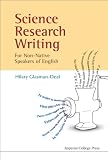
Science Research Writing: A Guide for Non-Native Speakers of English

by Hilary Glasman-deal
This book is designed to enable non-native English speakers to write science research for publication in English. It is a practical, user-friendly book intended as a fast, do-it-yourself guide for those whose English language proficiency is above intermediate. The approach is based on material developed from teaching graduate students at Imperial College London and has been extensively piloted. The book guides the reader through the process of writing science research and will also help with writing a Master's or Doctoral thesis in English. Science writing is much easier than it looks because the structure and language are conventional. The aim of this book is to help the reader discover a template or model for science research writing and then to provide the grammar and vocabulary tools needed to operate that model. There are five units: Introduction, Methodology, Results, Discussion/Conclusion and Abstract. The reader develops a model for each section of the research article throug...

Wind Energy Explained: Theory, Design and Application

by James F. Manwell
Wind energyโ€�s bestselling textbook- fully revised. ...

The Matrix Has You

by Thomas Ousterhout
The Matrix Has You by Thomas Ousterhout brings the fringes of cutting edge technology and the human imagination together and creates a revolutionary vision of the future that blurs the lines between man and machine. Using the popular film The Matrix as the metaphor, Ousterhout builds an impeccably supported argument that humans and machines, and virtual world technology, are headed for a common future where human perceptions and virtual experience will merge. The resulting โ€�Matrix-likeโ€� reality is not only possible, according to the author, it is closer than we imagine. Using the most recent references in popular and scientific literature, as well as the input and prognostications of leaders in the field of cognition, robotics, artificial intelligence, and brain-computer research, The Matrix Has You paints a future for humanity that is both awesome and ominous. Written in clear and accessible prose, author Ousterhout has produced a book that is both provocative and entertaining.

Smart Power: Climate Change, the Smart Grid, and the Future of Electric Utilities

by Peter Fox-Penner
New developments in the

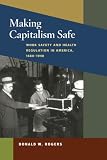
Making Capitalism Safe: Workplace Safety and Health Regulation in America, 1880-1940 (Working Class in American History)

by Donald W. Rogers
Workplaces in the United States are safer today than they were a hundred and twenty years ago. In this book, Donald W. Rogers attributes this improvement partly to the development in the Progressive Era of surprisingly strong state-level work safety and health regulatory agencies, a patchwork of commissions and labor departments that advanced safety law from common-law negligence to the modern system of administrative regulation. Rogers examines the Wisconsin Industrial Commission and compares it to arrangements in Ohio, California, New York, Illinois, and Alabama. Connecting this history to the creation of the Occupational Safety and Health Administration in 1970, Making Capitalism Safe will revise historical understandings of state regulation, compensation insurance, and labor law politics--issues that remain pressing in our time.

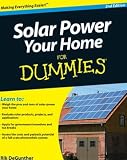
Solar Power Your Home For Dummies (For Dummies (Home & Garden))

by Rik DeGunther
The bestselling alternative energy reference book in North America?now in an updated edition ...

Social Computing and Virtual Communities

Growing more quickly than we can study or come to fully understand it, social computing is much more than the next thing. Whether it is due more to technology-driven convenience or to the basic human need to find kindred connection, online communication and communities are changing the way we live.
Social Computing and Virtual Communities compiles contributions from international experts to offer the sort of multidisciplinary study that is required in any investigation of communities. Delving fully into theories and methods, application areas, and types of online social environments, this book โ€”
...

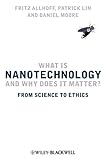
What Is Nanotechnology and Why Does It Matter: From Science to Ethics

by Fritz Allhoff
Ongoing research in nanotechnology promises both innovations and risks, potentially and profoundly changing the world. This book helps to promote a balanced understanding of this important emerging technology, offering an informed and impartial look at the technology, its science, and its social impact and ethics.
  • Nanotechnology is crucial for the next generation of industries, financial markets, research labs, and our everyday lives; this book provides an informed and balanced look at nanotechnology and its social impact
  • Offers a comprehensive background discussion on nanotechnology itself, including its history, its science, and its tools, creating a clear understanding of the technology needed to evaluate ethics and social issues
  • Authored by a nanoscientist and philosophers, offers an accurate and accessible look at the science while providing an ideal text for ethics and philosophy courses
  • Explores the most immediate and ur...

Lean Safety: Transforming your Safety Culture with Lean Management

by Robert Hafey
...

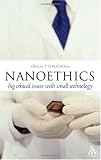
Nanoethics: Big Ethical Issues With Small Technology (Think Now)

by Donal P. O'Mathuna
Nanotechnology is revolutionising modern science, yet the public has little understanding of its ethical implications - this book explores the philosophy behind this hugely topical contemporary debate. Nanotechnology manipulates matter at the atomic level. It leads to innovative processes and products that are revolutionizing many areas of modern life. Huge amounts of public funds are being invested in the science, yet the public has little understanding of the technology or its ethical implications. Indeed, the ethical, social and political dimensions of nanotechnology are only beginning to receive the attention they require - outside of science fiction contexts. Surveillance devices may become so small that they are practically invisible to the naked eye, raising concerns about privacy. Nanomedicine may lead to the development of new diagnostic and therapeutic devices, yet anxieties have been raised about the impact of 'nanobots' circulating in our bodies. Military applications, or ...

Handbook of Aviation Human Factors, Second Edition (Human Factors in Transportation)

With more than 10 years since the publication of the first edition, this updated version of the Handbook of Aviation Human Factors is poised to reclaim its title of the most comprehensive book on human factors applied to aviation. Not only was every chapter updated, and in many areas significantly expanded, three chapters were added to address new areas and approaches: resilience, uninhabited aerial vehicles, and aesthetics. In addition to the above topic areas, the handbook includes chapters addressing the history of aviation human factors, current R&D focus, basic research issues, organizational factors, personnel selection, ATC and ATM relevant issues, weather systems, team and individual performance, fatigue, situation awareness, training, and forensics.

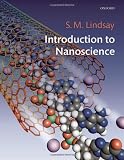
Introduction to Nanoscience

by Stuart Lindsay
Nanoscience is not physics, chemistry, engineering or biology. It is all of them, and it is time for a text that integrates the disciplines. This is such a text, aimed at advanced undergraduates and beginning graduate students in the sciences. The consequences of smallness and quantum behaviour are well known and described Richard Feynman's visionary essay 'There's Plenty of Room at the Bottom' (which is reproduced in this book). Another, critical, but thus far neglected, aspect of nanoscience is the complexity of nanostructures. Hundreds, thousands or hundreds of thousands of atoms make up systems that are complex enough to show what is fashionably called 'emergent behaviour'. Quite new phenomena arise from rare configurations of the system. Examples are the Kramer's theory of reactions (Chapter 3), the Marcus theory of electron transfer (Chapter 8), and enzyme catalysis, molecular motors, and fluctuations in gene expression and splicing, all covered in the final Chapter on Nano...
by David L. Goetsch
Known for its comprehensive coverage, this text covers all aspects of occupational safety and health in todayโ€�s global workplace. ย Appropriate for safety management, engineering and technology programs, the book follows a logical sequence that provides a historical perspective and overview, covers the laws and regulations, discusses the human element, examines hazard assessment, prevention, and control, and covers management of safety and health. This edition features updated OSHA standards and contemporary topics such as safety culture, safetyโ€�s role in global competitiveness, workplace violence, natural disasters and terrorism. Some new features include:
ย 
All OSHA standards, as well as those of other regulatory agencies, were updated Chapter 4:ย ย Added a new section on the โ€�Emerging Role of S...

Followers